
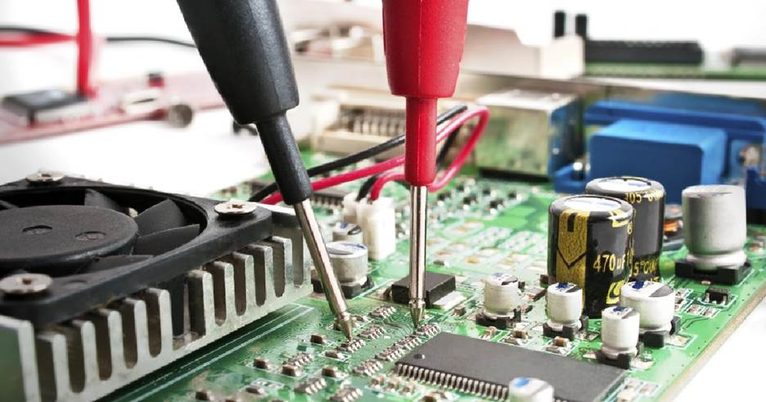
In Printed Circuit Board (PCB) assembly, quality control is essential to ensure that each board performs reliably and meets industry standards. With electronics becoming more compact and complex, even minor errors can result in significant performance issues, product recalls, and customer dissatisfaction.
Effective quality control (QC) techniques in PCB assembly not only reduce defects but also enhance product longevity, efficiency, and safety. Here are some of the most important QC methods used in PCB assembly to maintain high standards and ensure reliable, consistent output.
Automated Optical Inspection (AOI)
AOI uses high-resolution cameras and sophisticated software to inspect PCBs for defects like missing components, misalignment, and solder joint issues. The AOI system captures images of each board and compares them to a reference model, highlighting any discrepancies. It’s particularly useful for identifying issues early in production, allowing for timely corrections.
X-Ray Inspection (AXI)
For boards with high component density and complex layouts, Automated X-Ray Inspection (AXI) is a valuable QC method. AXI uses X-rays to detect hidden defects, such as poor solder connections and internal voids, especially for components with hidden leads.
In-Circuit Testing (ICT)
In-Circuit Testing (ICT) is a comprehensive testing method that checks the electrical performance of each component on a PCB. ICT involves placing a “bed of nails” fixture on the board to test individual circuits and components, including resistors, capacitors, and transistors, to verify proper connections. It can detect a wide range of issues, including shorts, open circuits, incorrect component values, and defective components.
Functional Testing (FCT)
Functional Testing (FCT) evaluates the PCB’s overall functionality by simulating the environment in which the board will operate. During FCT, the PCB is powered on and tested to ensure it performs according to specifications. This test checks for end-use functionality, making it one of the final QC steps before packaging.
Solder Paste Inspection (SPI)
Solder Paste Inspection (SPI) checks for solder paste defects after the paste is applied to the PCB. Using 3D imaging, SPI systems measure paste volume, height, and coverage, ensuring proper solder joints after reflow. Detecting solder paste issues early on helps prevent costly rework and ensures good solder joints, which are critical for PCB reliability.
Burn-In Testing
Burn-In Testing is a process where the PCB is subjected to high temperatures, voltage loads, and other environmental stresses to ensure reliability under extreme conditions. This test helps to identify early-life failures and assess the PCB’s durability. Burn-In Testing is commonly used in industries where product reliability is critical, such as aerospace and defense.
Environmental Testing
Environmental Testing evaluates how a PCB reacts to various environmental conditions, including temperature, humidity, vibration, and corrosion. These tests ensure that the board will function reliably under different environmental stresses. Environmental Testing also provides insights into the board’s longevity and durability, reducing the risk of failure in adverse conditions.
Electrical Testing (Continuity and Isolation)
Electrical Testing involves verifying the continuity and isolation of PCB circuits to ensure that current flows where it should and that there are no unintended connections.It prevents issues like shorts and open circuits that could lead to failure during operation. Electrical Testing is quick, cost-effective, and suitable for various PCB designs.
Thermal Imaging Inspection
Thermal Imaging detects any areas on the PCB that generate excessive heat when the board is powered on. It uses infrared cameras to capture temperature variations across the board, identifying hot spots that could indicate defective components or potential reliability issues. Thermal Imaging is most common for power electronics and high-density assemblies.
Statistical Process Control (SPC)
Statistical Process Control (SPC) is a quality control method that uses statistical data to monitor and control the PCB assembly process. By analyzing data trends, manufacturers can detect variations in quality and take preventive actions. SPC also improves process reliability and reduces waste, enhancing productivity and cost-efficiency.
Manual Visual Inspection
While automated inspections are highly effective, Manual Visual Inspection (MVI) remains an important QC method, particularly for low-volume or prototype PCBs. Skilled technicians inspect the boards for any physical defects that machines may miss, including component alignment, solder joint quality, and overall board appearance.
Quality Assurance From Sonic Manufacturing Technologies
Quality control is a critical part of PCB assembly, as it ensures that each board meets functional and reliability standards. From early-stage inspections like solder paste inspection to final tests like functional and environmental testing, each QC method contributes to reducing defects and producing high-quality products. To learn more about the Quality Assurance System from Sonic Manufacturing, contact us today. We have a well-defined, systematic evaluation system to ensure the highest standards are met each and every time.